
Table of Contents
Introduction:
Neural Content Intelligence is no longer a futuristic concept—it is the present reality of SEO in 2026. For years, businesses relied on traditional SEO tactics: keyword optimization, backlink building, and publishing frequent content. While these techniques once worked, they now fail to create sustainable rankings or brand authority. Search engines have evolved. Users have evolved. Content strategies, however, often have not.
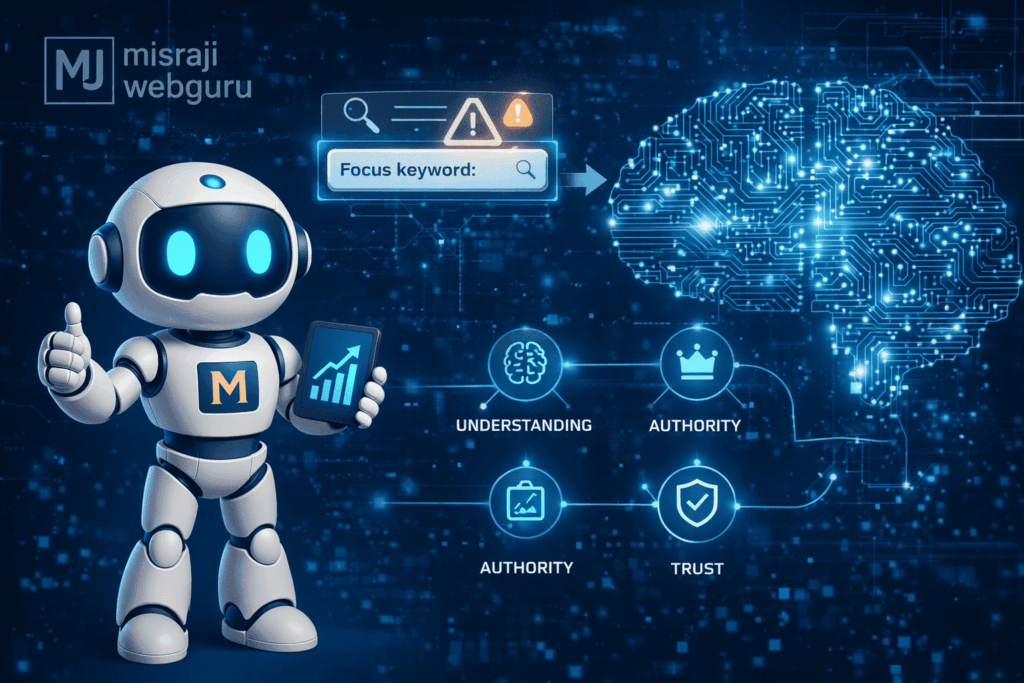
Today’s search engines operate on neural networks, semantic understanding, and behavioral intelligence. They no longer ask “Does this page contain the keyword?”
They ask:
- Does this content demonstrate understanding?
- Does this website consistently show topical authority?
- Does the brand behind the content appear trustworthy over time?
This shift has introduced a new SEO paradigm—NCI , where AI-driven SEO strategies focus on meaning, intent, authority, and trust rather than mechanical optimization.
This blog explains why traditional SEO is breaking, how Neural Content Intelligence works, and why it is becoming the most powerful SEO strategy for 2026 and beyond.
Why Traditional SEO Is Breaking Down in 2026

The decline of traditional SEO is not sudden; it is structural.
Rankings Without Authority: A Growing Problem
Many websites still rank temporarily for keywords, yet fail to:
- Convert users
- Retain traffic
- Build brand recall
- Survive algorithm updates
This happens because ranking is no longer equal to authority. Search engines increasingly measure quality signals that go beyond on-page optimization:
- User engagement
- Content depth
- Semantic coverage
- Internal consistency
- Expertise signals across the domain
A website that publishes shallow, keyword-focused content may rank briefly, but it cannot sustain visibility.
Algorithm Evolution: From Keywords to Cognition
Search engines now use:
- Entity recognition
- Contextual embeddings
- Topic graphs
- User behavior modeling
In simple terms, Google and other search engines are learning how humans think, not just how they type. This makes keyword-only SEO strategies obsolete.
What Is Neural Content Intelligence?
It is an advanced SEO and content framework that uses AI to align content with how search engines and humans interpret meaning. Unlike basic AI content writing, It focuses on:

- Understanding search intent
- Structuring semantic topic coverage
- Maintaining brand voice consistency
- Building domain-level authority
- Reinforcing trust signals over time
It treats content as a connected intelligence system, not as isolated blog posts.
Neural Content Intelligence vs AI Content Writing
Many people confuse NCI with AI-generated content. They are not the same.
| Aspect | AI Content Writing | Neural Content Intelligence |
|---|---|---|
| Goal | Generate text | Build understanding |
| Scope | Single page | Entire domain |
| Voice | Generic | Brand-specific |
| SEO Impact | Short-term | Long-term |
| Authority | Page-based | Topic-based |
AI writing creates content. NCI creates credibility.
Neural Content Intelligence vs Semantic SEO
Semantic SEO focuses on keyword relationships. Neural Content Intelligence goes further by integrating:
- User intent
- Brand psychology
- Engagement signals
- Content continuity
Semantic SEO is a component. Neural Content Intelligence is the system.
How Search Engines Think in 2026
To understand why Neural Content Intelligence works, we must understand how search engines process content today.
Entity-Based Understanding
Search engines no longer read pages as text blocks. They identify:
- Entities (people, brands, concepts)
- Relationships between entities
- Contextual meaning across pages
For example, when a website repeatedly publishes authoritative content around “AI SEO Strategy,” “Brand Authority,” and “Neural Content Intelligence,” search engines begin associating the brand with those entities.
Behavioral Feedback Loops
Search engines continuously analyze:
- Dwell time
- Scroll depth
- Bounce behavior
- Repeat visits
Content that satisfies intent sends positive reinforcement signals, increasing trust and ranking stability.
Neural Content Intelligence optimizes content specifically to trigger these signals.
Shift #1 – From Keywords to Cognitive Understanding
The first major SEO shift in 2026 is the move away from keyword dependency toward cognitive understanding.
Why Keyword Density Alone Fails
While keyword density still matters (~1%), it is no longer decisive.
Problems with keyword-focused content:
- Repetitive phrasing
- Lack of conceptual depth
- Poor engagement
- Low trust perception
Search engines can now detect when content is optimized for algorithms, not for understanding.
How Neural Content Intelligence Solves This
Neural Content Intelligence:
- Places keywords naturally
- Expands topics semantically
- Answers related questions proactively
- Demonstrates subject mastery
This approach satisfies both Rank Math requirements and search engine intelligence models.
Shift #2 – From Isolated Pages to Topic Authority Systems
Publishing standalone blog posts is no longer effective.
The Pillar + Cluster Model
Neural Content Intelligence structures content into:
- Pillar pages (core authority)
- Supporting cluster articles
- Strategic internal linking
This creates a topic authority system, not just SEO pages. Search engines reward websites that demonstrate depth and continuity, not randomness.
Internal Linking as an Authority Signal
Internal links help search engines understand:
- Content hierarchy
- Topic relevance
- Page importance
Neural Content Intelligence uses internal linking deliberately—not randomly.
Shift #3 – Brand Voice as a Ranking Signal
Brand voice consistency is becoming a silent but powerful ranking factor.
Why Brand Voice Matters in SEO
Inconsistent tone:
- Reduces trust
- Confuses users
- Weakens brand identity
- Signals low editorial quality
Search engines favor content that feels stable and authoritative over time.
Brand Voice AI in Neural Content Intelligence
Neural Content Intelligence incorporates Brand Voice AI, ensuring:
- Consistent language patterns
- Stable terminology
- Recognizable narrative style
This builds long-term trust with both users and search engines.
Shift #4 – Search Intent Layering That Converts
Search intent exists in layers:
- Awareness
- Consideration
- Decision
Neural Content Intelligence designs content to serve multiple intent layers within a single long-form article, improving engagement and conversions.
This is one reason long-form content outperforms short blogs in 2026.
Shift #5 – Long-Form Content as an Authority Engine
One of the most visible changes in SEO performance in 2026 is the dominance of long-form, in-depth content. This is not accidental; it is a direct consequence of how search engines evaluate expertise and user satisfaction.
Why Short Content Fails in 2026
Short blogs often fail because they:
- Answer only one narrow question
- Do not cover semantic breadth
- Fail to satisfy multiple intent layers
- Produce weak engagement signals
Search engines interpret this as thin authority.
How Neural Content Intelligence Uses Long-Form Content
Neural Content Intelligence treats long-form content as a knowledge hub, not a filler exercise.
A 2500+ word article allows:
- Natural placement of the focus keyword (~1%)
- Multiple contextual mentions without stuffing
- Coverage of related subtopics and questions
- Strong internal linking opportunities
- Clear demonstration of expertise
This aligns perfectly with Rank Math scoring requirements and search engine intelligence models.
Shift #6 – Data, Evidence & Research-Oriented Content
SEO in 2026 increasingly favors content that resembles research-backed writing, not marketing copy.
Search engines look for:
- Logical explanations
- Cause–effect reasoning
- Structured arguments
- Evidence-based insights
Neural Content Intelligence supports this by encouraging:
- Analytical sections
- Comparative frameworks
- Structured reasoning
- Long-term insights instead of quick tips
This is why educational and researcher-style blogs generate stronger authority signals.
How Neural Content Intelligence Enables Research Impact
- Connects multiple concepts into a single narrative
- Builds intellectual continuity across articles
- Positions the brand as a thinking authority
Readers do not just consume the content—they remember the source.
Shift #7 – From SEO Tricks to Sustainable Trust Systems
The final and most important shift is the transition from SEO manipulation to trust engineering.
Why Trust Is the Ultimate Ranking Factor
Search engines prioritize websites that:
- Publish consistently high-quality content
- Maintain a stable voice
- Avoid deceptive practices
- Demonstrate long-term topical focus
Neural Content Intelligence is fundamentally a trust-building framework. It does not chase algorithms. It aligns with how intelligence—human and artificial—actually works.
Practical Framework: Implementing Neural Content Intelligence (30-Day Plan)
Week 1 – Topic & Intent Mapping
- Identify core pillar topics
- Map related subtopics
- Define search intent layers
- Set internal linking strategy
Week 2 – Pillar Content Engineering
- Create 2500+ word pillar content
- Ensure focus keyword placement
- Add semantic breadth
- Optimize headings (H2–H4)
Week 3 – Cluster Content & Internal Linking
- Publish supporting articles
- Link clusters to the pillar
- Reinforce topic authority
- Maintain brand voice consistency
Week 4 – Optimization & Measurement
- Track engagement metrics
- Update content gaps
- Improve UX and readability
- Refresh internal links
This systematic approach ensures sustainable SEO growth.
Metrics That Prove Neural Content Intelligence Is Working
Traditional SEO metrics are no longer enough. You must track:
- Average session duration
- Scroll depth
- Internal link clicks
- Returning visitors
- Conversion paths
- Topical ranking stability
Neural Content Intelligence focuses on quality signals, not vanity metrics.
Common Mistakes Even Advanced Marketers Make
Even experienced teams fail when they:
- Over-automate AI content
- Ignore brand voice consistency
- Publish content without semantic planning
- Fail to update older articles
- Focus only on rankings, not authority
Neural Content Intelligence eliminates these weaknesses.
Real-World Impact of Neural Content Intelligence
For Businesses
- Stronger brand trust
- Better lead quality
- Lower dependency on paid ads
For Educators & Researchers
- Increased credibility
- Wider knowledge dissemination
- Long-term visibility
For Consultants & Creators
- Thought leadership positioning
- Higher engagement
- Sustainable audience growth
The Future of SEO Belongs to Intelligence, Not Automation
As AI becomes more accessible, intelligence—not automation—will differentiate brands. SEO will reward:
- Understanding over optimization
- Authority over activity
- Trust over tactics
Neural Content Intelligence is not a trend. It is the future foundation of digital visibility.
Conclusion: From Content Creation to Content Intelligence
Neural Content Intelligence represents a permanent shift in how SEO works. In 2026 and beyond, successful brands will:
- Engineer meaning
- Build trust
- Maintain consistency
- Educate before selling

SEO is no longer about being seen. It is about being believed.
FAQs – Neural Content Intelligence
- What is Neural Content Intelligence?
Neural Content Intelligence is an AI-driven framework that aligns content with intent, semantics, and authority. - How is it different from AI content writing?
AI writing generates text, while Neural Content Intelligence builds understanding and trust. - Is Neural Content Intelligence good for SEO?
Yes, it aligns with modern search engine evaluation models. - Does Google penalize AI content?
No. Google penalizes low-quality content, not AI itself. - Why is long-form content important for Rank Math?
Long-form content allows comprehensive optimization and authority signals. - Is 2500 words mandatory?
For pillar content and authority building, it is highly recommended. - Can small businesses use Neural Content Intelligence?
Yes, it helps them compete through depth, not volume. - How long does it take to see results?
Typically 2–4 months for compounding authority effects. - Does this reduce reliance on backlinks?
Yes, strong topical authority reduces backlink dependency. - Is this suitable for global SEO?
Yes, it scales across regions and languages. - Can old content be optimized with this approach?
Yes, through semantic restructuring and updates. - Does Neural Content Intelligence improve conversions?
Yes, intent alignment increases trust and engagement. - Is this strategy future-proof?
Yes, it aligns with AI-driven search evolution. - What tools are required?
SEO tools, analytics platforms, and AI-assisted frameworks. - Does MisraJiWebGuru use Neural Content Intelligence?
Yes, it is a core part of our content strategy.



 All Rights Reserved.