
Table of Contents
Introduction: Why AI Search Is Redefining E-commerce Visibility
AI Search for E-commerce is redefining how products are discovered, evaluated, and recommended across AI-powered shopping platforms.
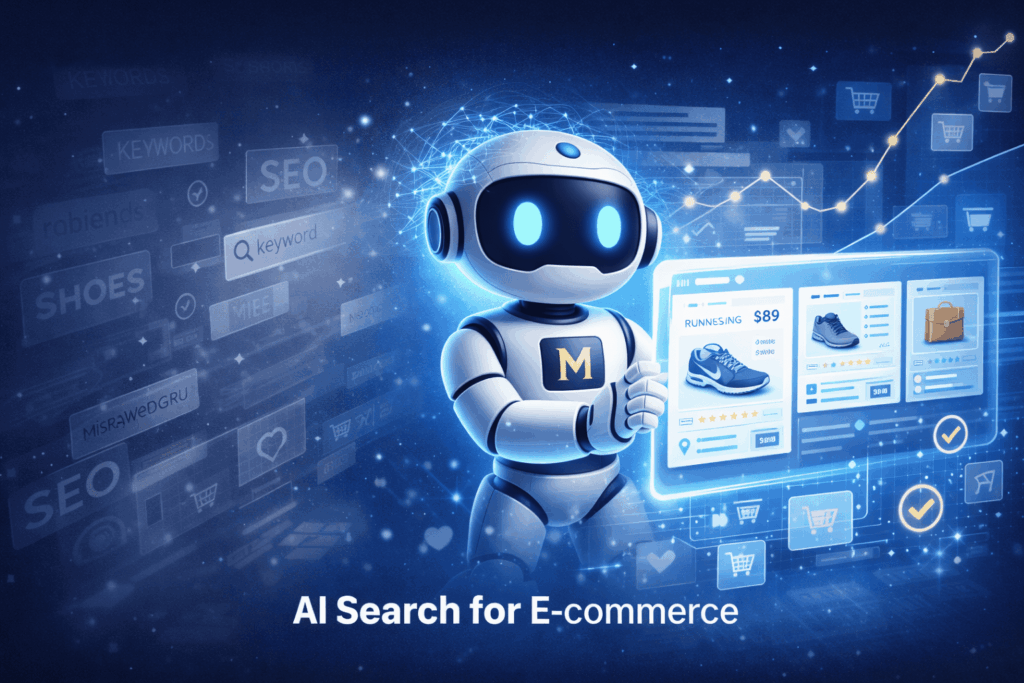
For years, e-commerce brands focused on traditional SEO tactics: ranking category pages, optimizing product descriptions for keywords, and relying on paid ads for visibility. While these tactics still have value, they no longer determine long-term success. The reason is simple: search systems are no longer keyword engines — they are intelligence systems.
Modern AI-driven search platforms do not ask:
“Does this page contain the keyword?”
They ask:
- Does this product match user intent?
- Is the data structured and trustworthy?
- Can this product be confidently recommended?
This shift has placed AI Search for E-commerce at the center of online visibility. Brands that adapt to this reality gain compounding advantages. Brands that ignore it slowly disappear from discovery.
At the heart of this transformation lies one critical asset: e-commerce product feeds.
This blog explains how AI search works in e-commerce, why product feeds now control visibility, and how you can optimize your data to win in AI-driven shopping environments in 2026 and beyond.
What Is AI Search for E commerce?
AI Search for E-commerce refers to how artificial intelligence systems interpret user intent, analyze structured product data, and surface relevant products across search, shopping, and conversational interfaces.
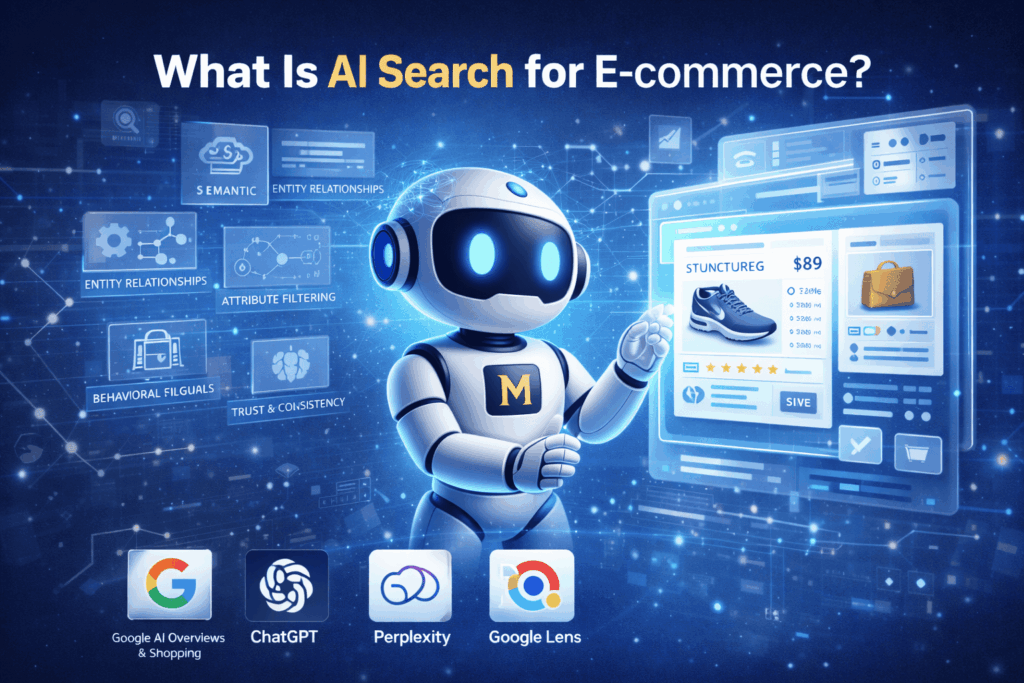
Unlike traditional search engines that relied on keyword matching, AI search systems use:
- Semantic understanding
- Entity relationships
- Attribute-based filtering
- Behavioral signals
- Trust and consistency checks
These systems power:
- Google AI Overviews and Shopping results
- Conversational shopping experiences in ChatGPT
- Product discovery on platforms like Perplexity
- Visual search tools such as Google Lens
In all these environments, AI does not browse your website the way a human does. Instead, it depends on clean, structured data inputs — most importantly, e-commerce product feeds.
Why Traditional SEO Alone Is No Longer Enough
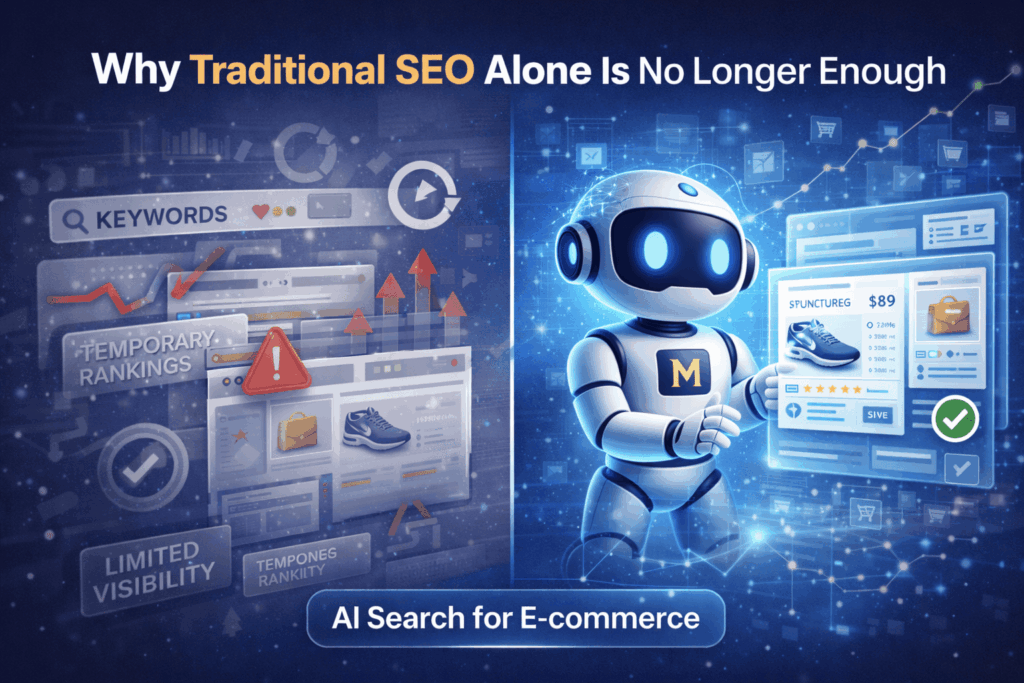
Many e-commerce sites still rank temporarily using traditional SEO methods. However, those rankings often fail to:
- Convert consistently
- Retain visibility after updates
- Appear in AI-generated results
- Build long-term brand trust
The reason is structural. Ranking is no longer equal to authority.
AI Search for E-commerce prioritizes understanding over optimization. If your product data is unclear, incomplete, or inconsistent, AI systems cannot confidently recommend your products — even if your website looks polished.
This is why brands that rely only on page-level SEO slowly lose ground while data-driven brands gain visibility.
The Role of E-commerce Product Feeds in AI Search
E-commerce product feeds are structured datasets that contain detailed information about your products, including:
- Product titles
- Descriptions
- Pricing
- Availability
- Brand identifiers
- Attributes such as size, color, material, and use case
Platforms like Google Shopping, Meta, Amazon, and TikTok Shops rely heavily on these feeds. AI systems now treat them as primary sources of truth. In AI Search for E-commerce, product feeds matter more than blogs, landing pages, or ads. They provide AI with clarity, structure, and confidence. If your feed is weak, your visibility is weak.
How AI Search Engines Use Product Feed Data
AI systems evaluate product feeds to answer one core question:
“Can this product satisfy the user’s intent?”
They assess:
- Attribute completeness
- Title clarity
- Description relevance
- Pricing consistency
- Image quality
- Identifier validity
When feeds are enriched and accurate, AI systems are more likely to:
- Include products in recommendations
- Surface them in conversational answers
- Feature them in comparison summaries
- Show them in visual search results
This is why e-commerce product feeds are now a visibility strategy, not a backend task.
7 Proven Product Feed Strategies for AI Search for E-commerce
1. Write Titles for Understanding, Not Keywords
In AI Search for E-commerce, product titles act as the first signal of meaning.
Weak title:
“Running Shoes”
Strong title:
“Men’s Waterproof Trail Running Shoes – Lightweight, Black”
AI systems prefer descriptive, human-readable titles that clearly communicate:
- Who the product is for
- What it is
- What makes it different
Avoid keyword stuffing. Clarity always wins.
2. Expand Descriptions With Real Context
Descriptions should reinforce titles by explaining:
- Materials
- Fit
- Use cases
- Benefits
- Limitations
AI search systems analyze descriptions to refine relevance. Vague or promotional language reduces confidence. In AI Search for E-commerce, specificity builds trust.
3. Complete Every Available Product Attribute
Attributes are the backbone of AI-driven filtering.
Essential attributes include:
- Size
- Color
- Material
- Gender or age range
- GTIN or MPN
- Intended use
Missing attributes mean missed opportunities. AI systems do not infer — they filter. Well-structured e-commerce product feeds allow AI to match products to complex, natural-language queries.
4. Use High-Quality Images With Descriptive Alt Text
AI search is increasingly multimodal. Visual models analyze images for:
- Color accuracy
- Shape
- Texture
- Packaging
- Context
Pair high-resolution images with descriptive alt text to give AI both visual and linguistic signals. This improves performance in:
- Visual search
- AI summaries
- Product comparisons
5. Maintain Pricing and Availability Consistency
AI systems cross-check data across sources. If your feed says “in stock” but your site says otherwise, trust decreases.
Consistency across:
- Product feeds
- Product pages
- Marketplaces
is essential for long-term visibility in AI Search for E-commerce.
6. Implement Structured Product Schema
Schema markup reinforces trust.
Include structured data for:
- Product
- Price
- Availability
- Reviews
AI systems treat schema as confirmation, not decoration. It strengthens feed reliability.
7. Automate Feed Quality at Scale
As catalogs grow, manual optimization becomes impossible.
Use automation tools to:
- Standardize titles
- Populate missing attributes
- Flag inconsistencies
- Maintain feed hygiene
Automation ensures your e-commerce product feeds stay AI-ready over time.
How AI Shopping Assistants Discover Products
AI shopping assistants generate recommendations using multiple data sources:
- Merchant Center feeds
- Structured schema markup
- Marketplace listings
- Verified product databases
- Reviews and ratings
- Visual signals
Products with richer, clearer data appear more often in:
- “Top picks”
- Comparison lists
- Conversational responses
- Visual discovery tools
AI Search for E-commerce rewards brands that communicate clearly to machines.
Common Mistakes That Reduce AI Visibility
- Generic product titles
- Missing attributes
- Keyword-stuffed descriptions
- Pricing mismatches
- Low-quality images
- No schema implementation
Each mistake reduces AI confidence. Fixing them compounds visibility gains.
Measuring Success in AI Search for E-commerce
Traditional rankings are no longer the only metric. Track:
- Inclusion in AI-generated results
- Diversity of product discovery
- Engagement from AI-driven referrals
- Stability across algorithm updates
These signals reflect true alignment with AI Search for E-commerce.
The Future of AI Search and E-commerce Product Feeds
By 2026 and beyond:
- Product feeds will replace pages as primary discovery inputs
- AI will reward clarity over creativity
- Structured data will define authority
- Brands will compete on intelligence, not volume
Those who invest early in feed quality will dominate visibility.
FAQs
What is AI Search for E-commerce?
AI Search for E-commerce is the use of artificial intelligence to match user intent with products using structured data instead of keyword-based ranking.
Why are e-commerce product feeds important for AI search?
AI systems rely on e-commerce product feeds because they are structured, consistent, and easier to interpret at scale.
How do I optimize product feeds for AI Search for E-commerce?
Use clear titles, complete attributes, schema markup, quality images, and automation to maintain accuracy.
Is traditional SEO still relevant?
Yes, but it supports AI search rather than controlling it. Structured data now leads.
Can small e-commerce stores compete in AI search?
Yes. Clear, accurate product feeds level the playing field.
Conclusion: Visibility Comes From Clarity
AI Search for E-commerce has permanently changed how products are discovered. Visibility is no longer earned through keywords alone. It is earned through clarity, structure, and trust.
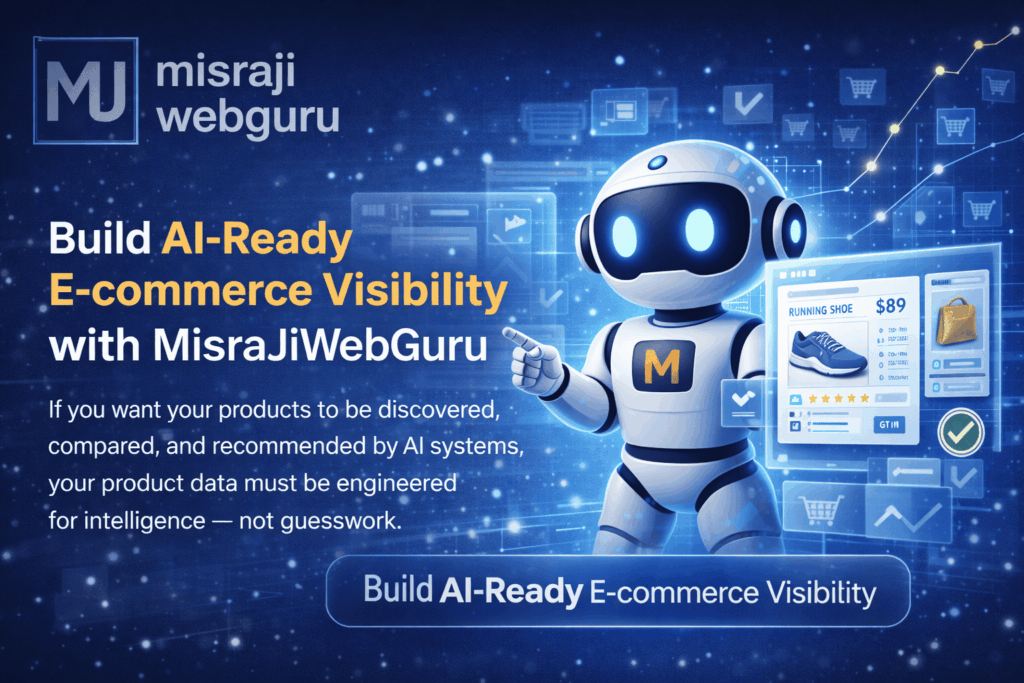
Brands that optimize e-commerce product feeds for AI systems will:
- Appear earlier in discovery
- Earn AI recommendations
- Build durable visibility
SEO is no longer about being seen. It is about being understood — and believed.


 All Rights Reserved.